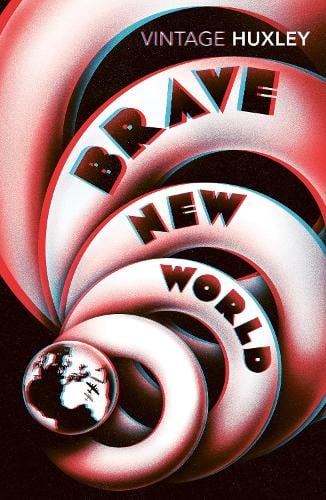
Orwell feared surveillance and the control of information, Huxley feared those who would give us so much that we would be reduced to passivity.
A society controlled by pleasure, distraction, and consumerism, where people willingly surrender freedom for comfort. (sidenote: see my post on bars from books, for a SOMA holiday.)
“But I don’t want comfort. I want God, I want poetry, I want real danger, I want freedom, I want goodness. I want sin.”
This book made me feel awe and disgust. And fear.
I recommended it to friends, one of them excitedly reported back that the imagery of SOMA had one-shotted them away from doomscrolling social media.
I think that is the obvious message to grasp here, the standard “phones bad / dopamine society” reading. Avoid comfort. Our attention spans are being hijacked. That reading is true, but it’s almost too easy.
The deeper horror is that the World State is not obviously evil from the inside. It is frictionless. Predictable. Measurable. Hygienic. Nobody starves. Nobody grieves for long. Nobody risks unbearable loneliness or transcendence either.
And when the Savage appears, we expect him to feel like freedom. But instead he feels embarrassing.
As if we ourselves had just been ripped away from that lawful, predictable, governed society. We feel the shock, transitioning from our comfortably reclined soma-holiday theatre seat, thrown violently into the mess of savages humanity. The very world we are calling a dystopia.
The novel doesn’t just expose the artificiality of the World State, it exposes how deeply we have already adapted to it.
There’s something humiliating in realising we may genuinely prefer comfort over truth. That’s why the disgust feels double-sided. You’re disgusted by the World State, but also by the realisation that you understand it. That some part of you would choose soma.
If John were effortlessly noble, the book would become simple propaganda: nature good, modernity bad. But John is unstable, theatrical, self-punishing, almost unbearable at times. Huxley refuses to romanticize “authentic humanity.” Real humanity is messy and often ugly.
And Mond replies:
“In fact… you’re claiming the right to be unhappy.”