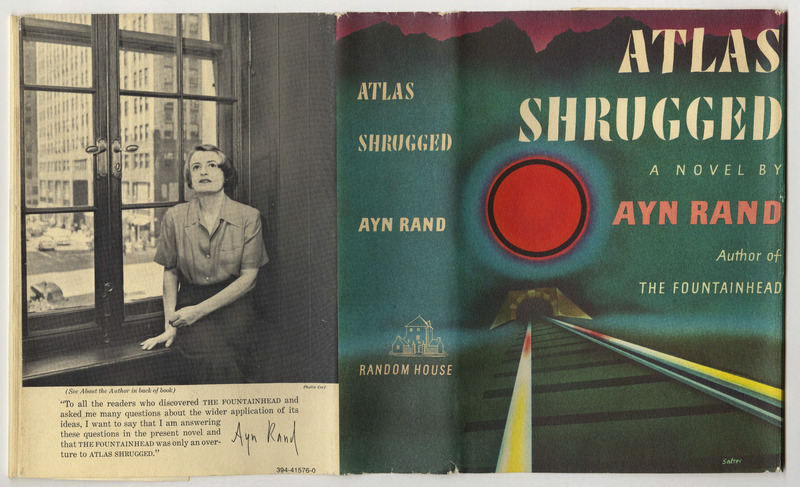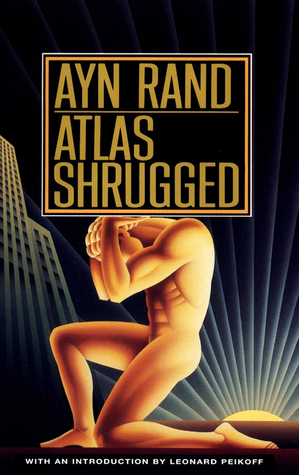
Notes from the book I have most gifted to others. That has solidified friendships, and that I am often afraid to admit my liking of.
Resentment often disguises itself as morality.
This book is divisive. The criticism I received for reading and enjoying this book most often came from those that hadn’t actually read it. I am aware of smart friends that value the philosophy of Objectivism, I am aware of equally smart friends that do not.
What makes Atlas Shrugged powerful is that many read it as soley politics or economics. The book functions as emotional provocation disguised as philosophy. Rand does not merely present arguments, she constructs archetypes, tensions, and moral conflicts in such an exaggerated and emotionally charged way that the reader is almost forced into reaction. And to her craft, readers respond Atlas Shrugged with unusual intensity, either admiration, disgust, inspiration, or rejection, because the book does not feel like neutral argumentation. It feels like an attack or a validation, depending on the reader. The book is not asking whether capitalism works. It is asking what happens when competence becomes treated as moral obligation.
Rand Worships Greed?
It is perceived by it’s critics as praise of selfishness and the pursuit of personal happiness as the highest moral purpose, placed above the collective good.
I disagree with this take, and I further respect Rand for creating such controversial work. Defending the moral legitimacy of exceptional people refusing extraction.
“I swear by my life and my love of it that I will never live for the sake of another man, nor ask another man to live for mine.”
What Atlas Shrugged is actually doing is stress testing a moral framework to destruction. Rand takes the principle that ability creates obligation, that competence morally owes itself to need, and then follows that logic all the way to its endpoint. The result is a society that slowly cannibalizes the very people capable of sustaining it.
Rand conveys this exceptionally well through caricatures. Characters such as James Taggart are intentionally grotesque, as Rand dramatises psychological archetypes. Taggart is weak, incompetent and morally dependent on the productive capacity of others while simultaneously and vocally resenting their existence. His outrage is important because it exposes a contradiction: he NEEDS the people he condemns so vehemently.
This cautionary tale plays out in a dystopian society that carries uncomfortable realism. What makes the novel so emotionally effective is that the dynamics do not remain abstract or political, they begin appearing everywhere: institutions, companies, friendships, relationships. The competent become load-bearing. The load-bearing become resented. Resentment moralizes itself into virtue while dependence simultaneously deepens.
My favourite part is the mirroring of the societal through personal relationships. Henry Rearden is expected to endlessly give emotional, financial, and moral energy to people who define their need itself as a claim upon him. If they can establish moral entitlement, they can continue extracting from him indefinitely.
Dagny Taggart represents the opposite. She is devotion to creation, competence, movement, and purpose. To produce versus to claim. To build versus to demand. The result is a sacrifice of herself, which directly opposes the main criticism - ( selfishness and pursuit of personal happiness) - Dagny is one of the greatest characters I have ever encountered through a book.
“Devotion to the truth is the hallmark of morality; there is no greater, nobler, more heroic form of devotion than the act of a man who assumes the responsibility of thinking.
Her world becomes hyper-polarized between creators and parasites. Critiques argue that this flattens human complexity. But taken as a warning against civilizations that punish competence while rewarding performative moralism, the book remains powerful. Especially because so many people react to it emotionally before intellectually, almost as though the book is attacking identity structures themselves.
Messages that elicit heightened emotional responses remain to be the most powerful.
“I started my life with a single absolute: that the world was mine to shape in the image of my highest values and never to be given up to a lesser standard, no matter how long or hard the struggle.”
I do not think Atlas Shrugged endures because it successfully defends every aspect of Objectivism. It endures because it identifies a dynamic that feels permanently recurring: the transformation of competence into obligation, and the slow moral consumption of the people capable of building, sustaining, and creating.