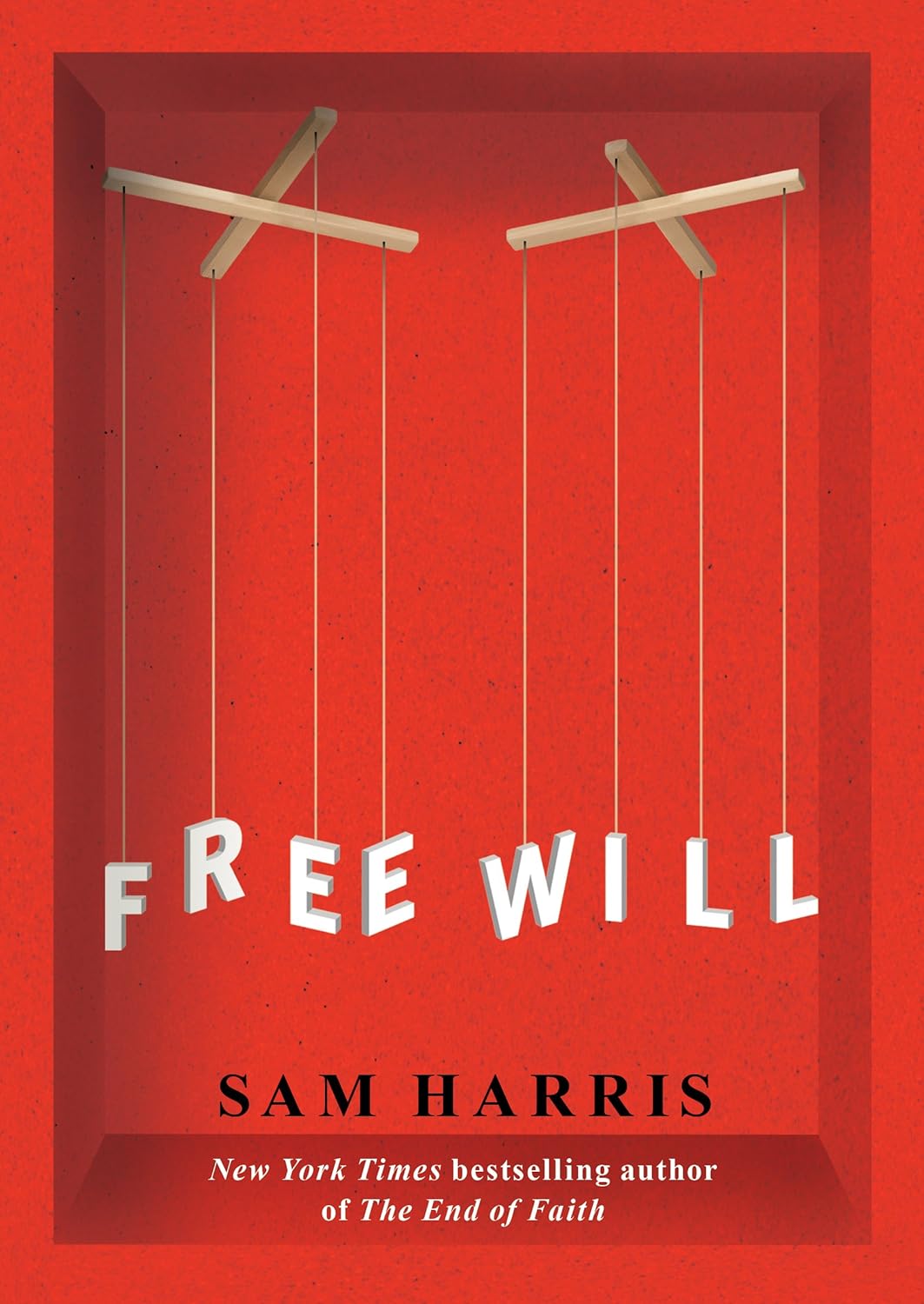
You do not consciously create the thoughts that appear in your mind. They arise prior to conscious awareness. Because thoughts, impulses, desires, intentions, and decisions emerge from causes you did not choose, the traditional idea of free will collapses.
His favourite move is to ask something like: “Think of a city.” Whatever city appears, you did not choose it before it appeared. The thought simply emerged into consciousness. You became aware of it after the fact.
Genetics? Your upbringing? Neurochemistry? Your unconscious drives and moment to moment thoughts? Not consciously authored or chosen.
Therefore: the self claiming ownership over decisions is more like a witness to processes than an independent causal commander.
The book is really downstream of mindfulness practice and elucidative of his meditation background. If you observe consciousness carefully enough, thoughts begin to feel received rather than created.
Importantly, Harris isn’t arguing nihilism. He still believes choices, consequences, and incentives exist, and that responsibility matters as a social framework. What dissolves is moral superiority, once you accept that people are expressions of prior causes.
The book is stronger when read alongside neuroscience. Predictive processing models suggest cognition looks less like a sovereign self issuing commands and more like competing neural processes. Some experiments show neural activity predicting a decision before subjects consciously report making it. Harris leans on this heavily.
Where it weakens is in collapsing distinctions between metaphysical free will and practical agency. Humans clearly possess varying degrees of self-awareness, inhibitory control, and the capacity to reshape habits and environments. The real question -what kind of constrained agency actually exists inside a causal system? And that is where thinkers diverge. The deeper impact of the book is existential rather than philosophical. Fully internalised, it destabilises pride, egoic identity, some may find this liberating while others, unsettling. The irony is that the feeling of being convinced by the argument would, in Harris’ framework, not be freely chosen either.