
Robert Anton Wilson’s central idea is that the human mind does not passively perceive reality. Instead, it constructs reality through imprints, conditioning, and learned programs. He delivers a deliberately unstable, semi-scientific, occult-comedic, cybernetic model for asking which program we are currently running in ourselves, and how we can tell. The book then, is a manual for becoming aware of one’s own programming.
What the Thinker thinks, the Prover proves. The “Thinker” generates a belief, hypothesis, fear, identity, or frame. The “Prover” then scans reality for evidence that confirms it.
The mind is a kind of bio-computer running different types of programs; genetic imperatives that determine basic biological drives: survival, reproduction, bonding, threat detection, status. Imprints, early and emotionally loaded, are laid down during sensitive periods. They modify circuits, wiring of perception. Conditioning through reward/punishment loops solidify behavior. Learning sits on top of imprinting, more flexible, conscious, conceptual updating. This is why you can intellectually understand something but still not feel it.
The eight-circuit model is Wilson’s map of human consciousness, originally conceptualised by Timothy Leary
Circuit I, the bio-survival circuit, concerned with safety and nourishment. In infancy, this circuit is shaped by whether the world feels warm and secure, or cold and threatening, later manifesting as self-assured confidence or anxiety. Governs instinctual behaviors, fight/flight response and subsequent HPA/ANS reactions to stress and survival threats.
Circuit II, the emotional-territorial circuit, emerges as the child begins to establish agency. Imbalances in the Emotional-Territorial Circuit can manifest as feelings of inferiority/inadequateness/submissiveness vs. superiority/grandiosity/dominance and aggression.
—
Circuit II can also be interpreted through Leary’s interpersonal circumplex and the “life positions” taught in Transactional Analysis. Leary’s model maps interpersonal behaviour across two axes: dominance versus submission, and trust/affiliation versus suspicion/hostility. This gives a useful way to understand the emotional-territorial circuit not merely as “dominance” in a crude sense, but as a whole bodily orientation toward status, safety, threat, and relational power.
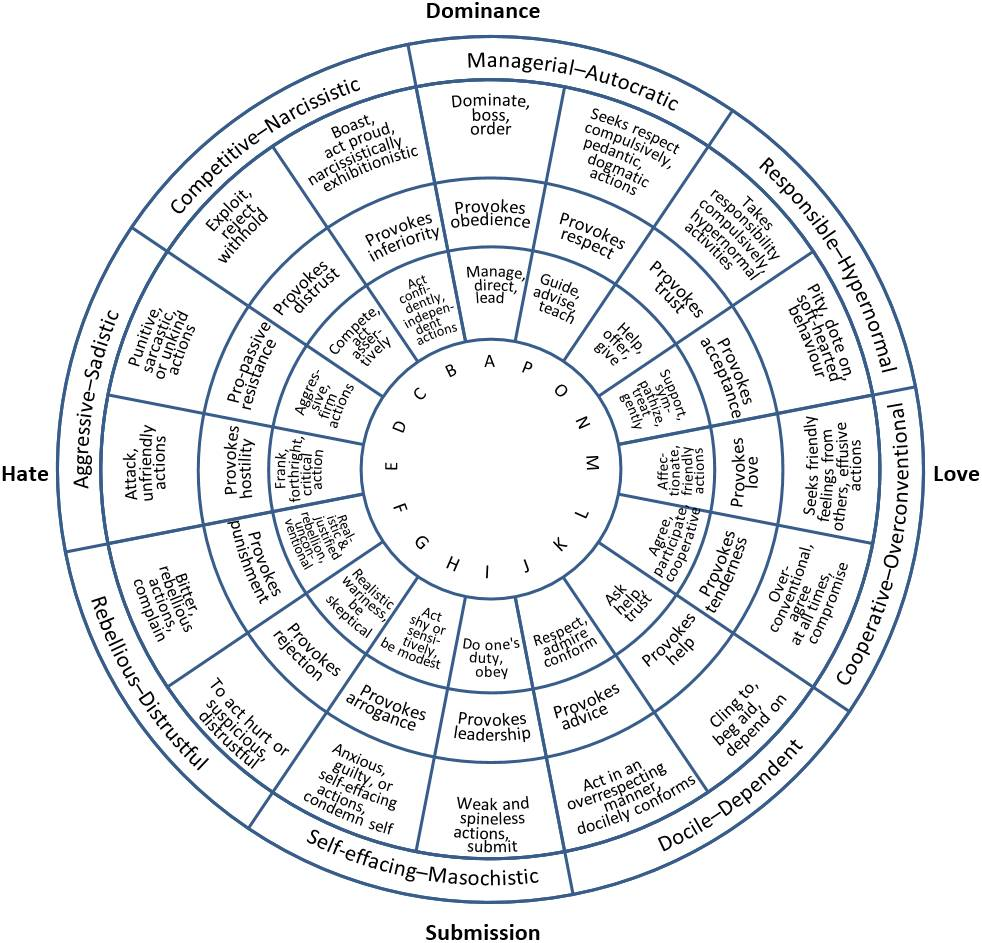
Figure 1. Dr. Timothy Leary’s interpersonal grid
The vertical axis corresponds most directly to Circuit II: the feeling of being above or below, powerful or powerless, dominant or submissive. The horizontal axis overlaps more with Circuit I: whether the other is experienced as safe, nourishing, and trustworthy, or as threatening, withholding, and hostile. Together, these axes produce the four interpersonal positions of the The “I’m OK, You’re OK” concept, a foundational principle of Transactional Analysis:
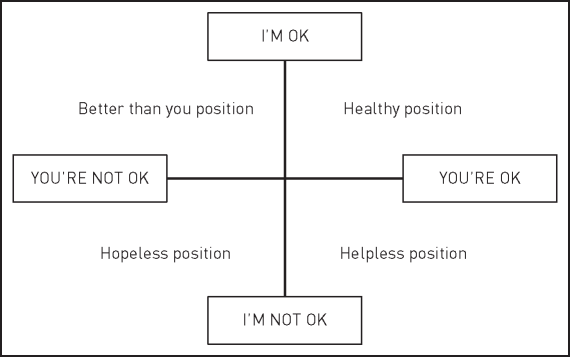
Figure 2. TA is one of the older psychological languages that maps surprisingly well onto the first few circuits, especially Circuit II.
This links Wilson’s model to Transactional Analysis, what looks like a belief about oneself may actually be a deep interpersonal imprint: a learned bodily expectation about where one stands in relation to others. In this sense, status anxiety, shame, dominance games, people-pleasing, resentment, and withdrawal can all be read as Circuit II patterns.
—
Circuit III, the time-binding semantic circuit, or the rational mind. Involves language, symbols, concepts, tools, dexterity, calculation, and the ability to transmit knowledge across time. This is the circuit of intelligence, articulation, and abstract thought. The semantic circuit has an enormous capacity for growth because language and symbolic thought can expand indefinitely. Humans can build sciences, philosophies, technologies, and ideologies because the semantic circuit allows ideas to compound across generations.
Wilson argues that the potential for growth is often constrained by the fourth circuit…
Circuit IV, the socio-sexual (moral) circuit, imprinted around puberty and governs sexual identity, social belonging, morality, taboo, respectability, and our reproductive behaviour. Sexual shame and moral fear bind deeply into identity, he believes many fail to actualise if because their curiosity, pleasure, and self-expression are constrained by inherited sexual/moral taboos.
Circuit V, the neurosomatic circuit, concerns the ability to experience the body as a source of pleasure, bliss, vitality, and healing rather than merely survival or tension. This is the circuit of somatic ecstasy: yoga, meditation, breathwork, psychedelics, dance, and altered states may all activate it. In a grounded interpretation, this circuit points to the idea that consciousness can reshape bodily experience.
Circuit VI, the neurogenetic circuit, deeper access to evolutionary memory, archetypal intelligence, and the body’s genetic inheritance. The idea that the nervous system carries ancient evolutionary patterns that can sometimes be felt or symbolically accessed.
Circuit VIII, the non-local quantum circuit, non-local consciousness, and experiences that seem to transcend ordinary space-time. Wilson here stretches the map to include states of consciousness that reductionist models tend to dismiss or pathologise.
Brainwashing and reimprinting occur when a person is reduced back to Circuit I vulnerability. Cults, militaries, abusive relationships, extreme ideological environments destabilise a person’s survival circuit through fear, exhaustion, isolation, hunger, humiliation, or uncertainty. Once the person is made dependent and vulnerable, new beliefs can be installed more easily. Wilson’s point is that belief change is rarely just intellectual; it often requires a shift in bodily safety, social belonging, and emotional dependency.
Reality-tunnels
This was a another standout concept from the book. We each see the world through a subjective lens, or “reality tunnel,” that has been largely shaped by forces outside of our conscious awareness and control.
Wilson is sceptical of rationalists who believe they can overcome all irrationality through logic alone. In his view, rationalists often underestimate the power of their own imprints. They may think they are neutrally evaluating reality, while actually defending a deeply conditioned worldview. By constructing a reality-tunnel a rationalist begins with the assumption that psychic or mystical experiences cannot exist, then any evidence for them will be filtered out, mocked, or reduced to error. Wilson’s deeper point is epistemological: every worldview determines what counts as evidence, what counts as nonsense, and what kinds of experience are allowed to appear real.
The book’s practical message is that identity is programmable. What we call “reality” is partly a nervous-system construction produced by early imprinting, social conditioning, language, and belief. To read Prometheus Rising well, one should not ask, “Is every circuit literally true?” but rather, “What does this model reveal about how my own perception is constructed?” The value of the book lies in using it as a tool for metaprogramming: noticing your survival fears and inherited reality-tunnels, then experimenting with new ways of seeing.