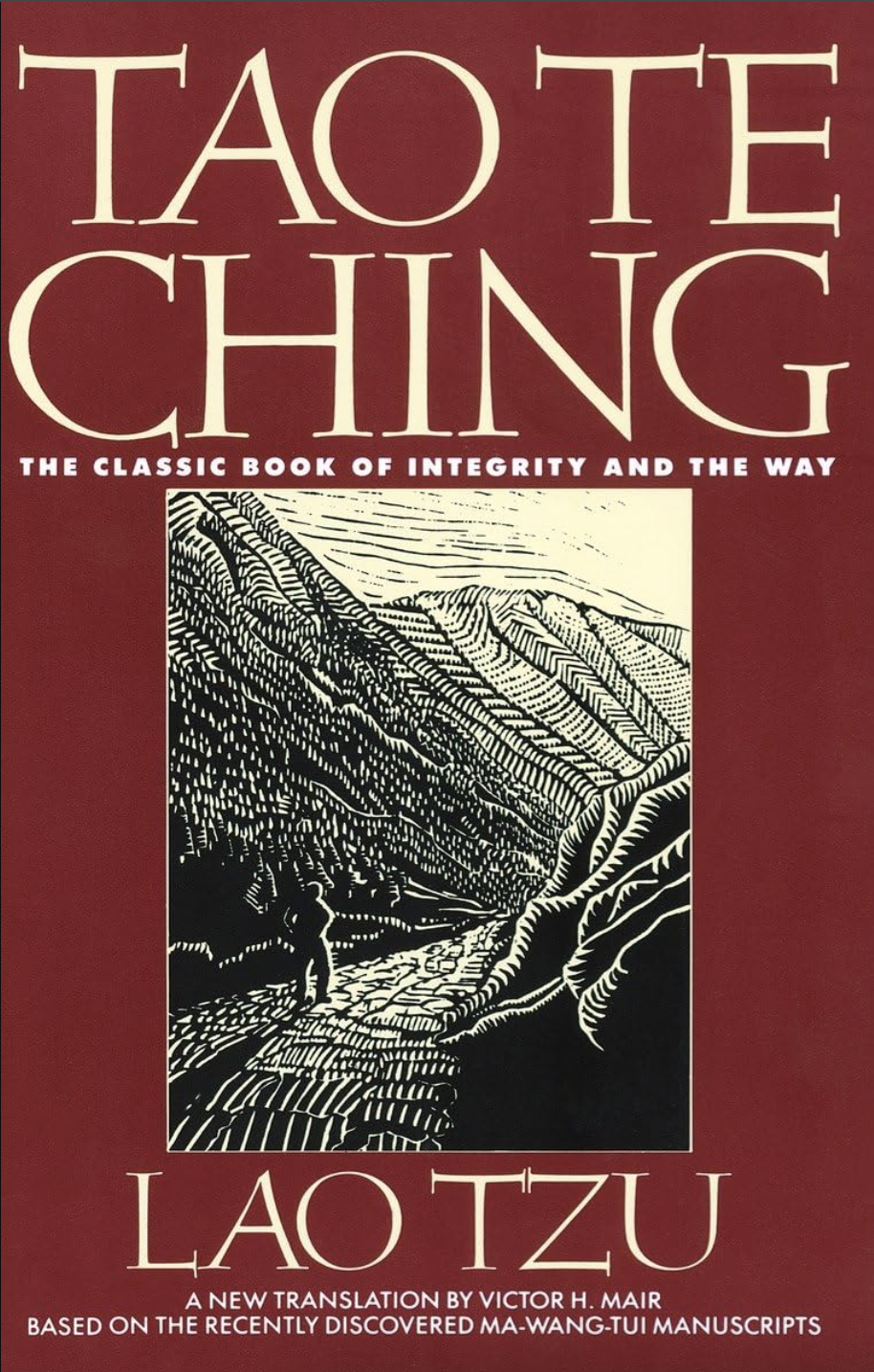
I came to this book in my first year of university, hearing it referenced many times in Jim O’Shaughnessy’s Infinite Loops podcast, cited as foundational to his worldview, treating it not only as an interesting historical artefact but as working infrastructure for how he thinks about probability, and navigating complex systems. Coming to a 2,500-year-old Taoist classic through a quantitative investor is a rather strange entry point, It’s perfect.
“Simplicity, patience, compassion.
These three are your greatest treasures.
Simple in actions and thoughts, you return to the source of being.
Patient with both friends and enemies,
you accord with the way things are.
Compassionate toward yourself,
you reconcile all beings in the world.”
― Lao Tzu
Key ideas
Wu Wei: acting without forcing; moving with the grain of things rather than against them.
Yielding is not weakness but a different mode of strength.
A vessel is useful because of what it lacks.
Stillness carries its own force.
Yin-yang: opposites are not in conflict but in balance, each defines and requires the other.
Qi: vital energy cultivated through presence, breath, and deliberate attention
Non-attachment, mastery of the self requires releasing the need to control outcomes
The Tao as process: the Way is not a destination or a doctrine but the underlying pattern of how things move