On the shore of Lake Zürich sits Bollingen Tower. Carl Jung spent decades building it with his own hands. He carried stones, carved symbols into walls, and treated the structure as a physical extension of his inner world. A central tower came first. Later he added a second tower, a private courtyard, and further rooms. Each addition arrived at a different stage of his life until the structure itself began to resemble a psychological map, he described the form that emerged as a symbol of psychic wholeness. One inscription sits on the tower which Jung called his confession in stone:
“Philemonis Sacrum, Fausti Poenitentia.” “Philemon’s shrine, Faust’s repentance.”
To understand why these two figures, the pious elderly husband from Ovid’s Roman mythology, and Goethe’s character is loosely based on Johann Georg Faust (c. 1480–1540), were placed together, means understanding who they were to Jung. And why he called it his personal confession.
“Words and paper, however, did not seem real enough to me; something more was needed. I had to achieve a kind of representation in stone of my innermost thoughts and of the knowledge I had acquired.”
As a child, Jung felt two distinct presences inside himself. Personality No.1 lived inside the expectations of the world around him. One felt young, social, and rooted in ordinary life. The other felt ancient. He described it as a man from the eighteenth century walking through his inner world. Personality No.2 carried a sense of distance from time, of myth, religion, and symbolic meaning. Jung later entered his period of confrontation with the unconscious and no longer described himself as a person with two personalities. Instead, he described himself as someone meeting figures inside a larger psychic world.
To Jung, Faust was the brilliant Western mind that expands, conquers, builds, seeks power and knowledge at any cost. Philemon was Jung’s inner wise figure, he represented meaning, soul, and what Jung called the objective reality of the psyche.
In the murder of Phileamon, destruction arrives as a side effect of movement toward something larger. Jung later read this scene and felt a sense of guilt, as though he had participated in the act himself, he felt as though he himself had helped commit the murder. Jung did not reject Faust. He recognized himself in him. Jung himself was highly Faustian: ambitious, intellectually voracious, trying to map the entire psyche.
So if the warning, and confession, is not a rejection of Faust, rather it seemed Jung saw danger in the identification. A person starts with a goal, then slowly becomes inseparable from the drive to expand, and eventually forgets why he began moving in the first place. The danger Jung saw did not stem from evil, but unconscious success. As one builds achievement, they may loose attention. This was the confession he carved into the stone.
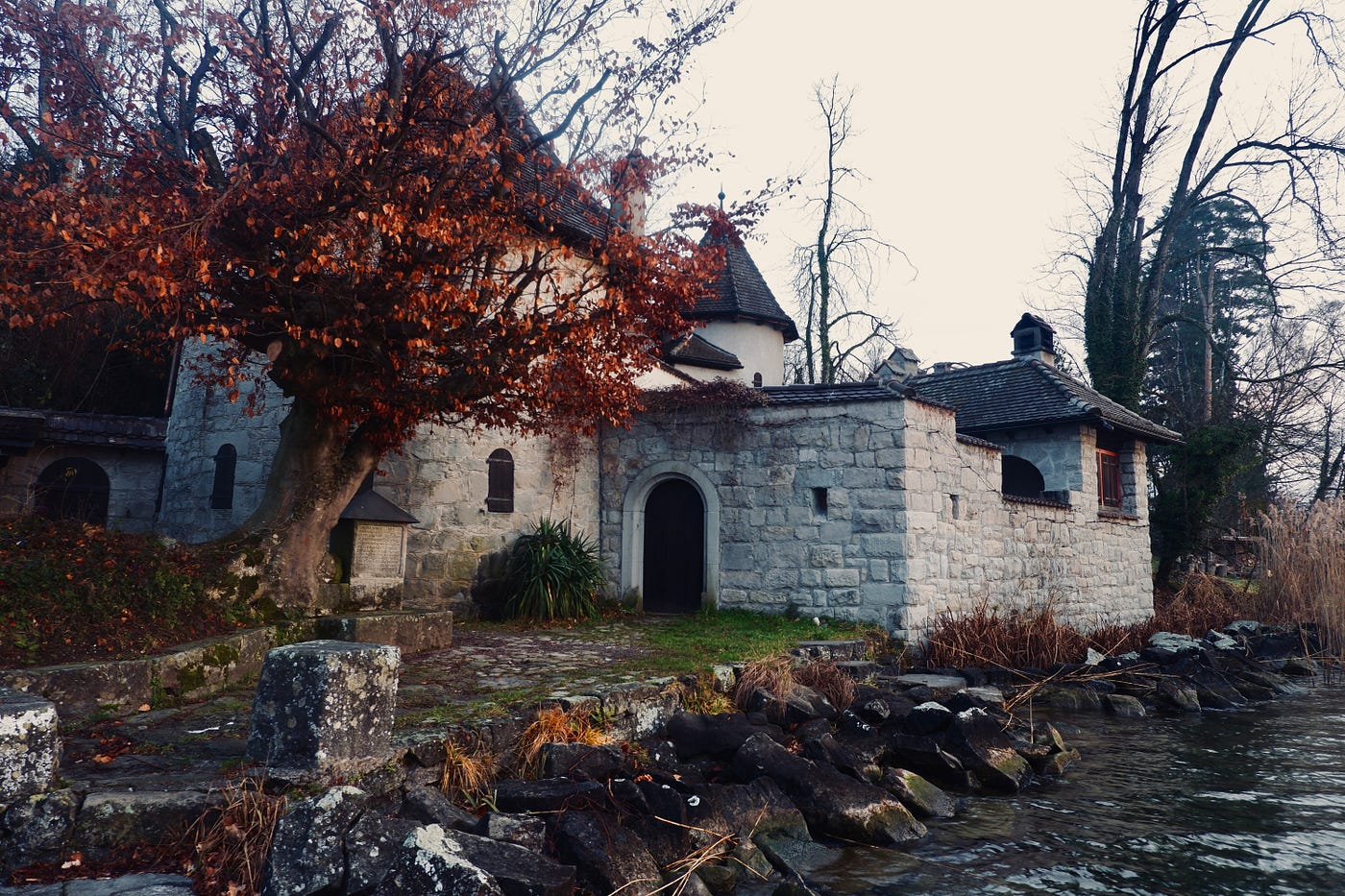
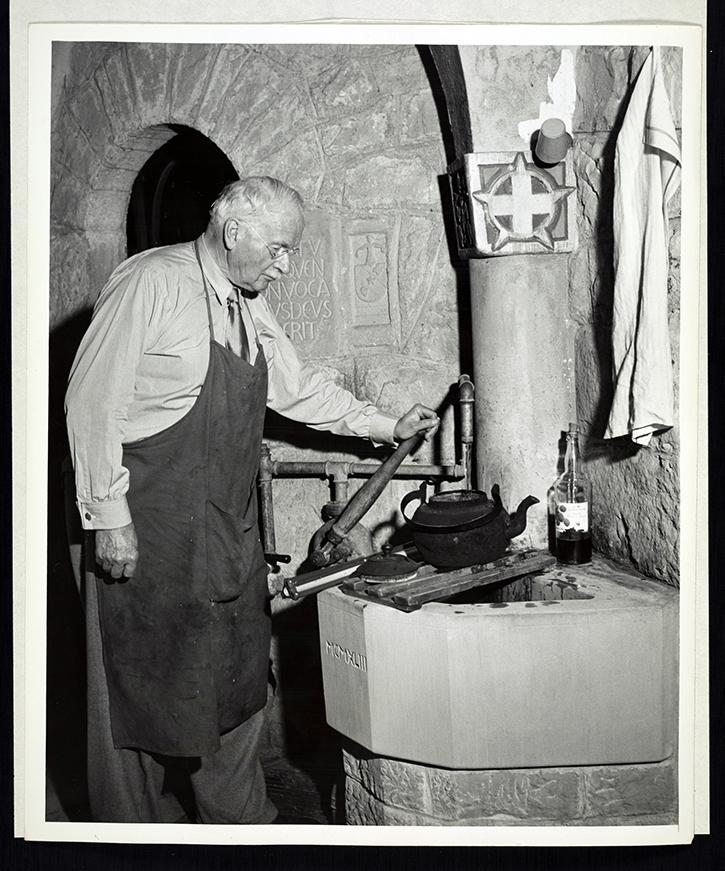
Carl Jung pumping water in the Tower at Bollingen. From the Library of Congress.
At Bollingen Jung tripped away layers of modern life. “I have done without electricity, and tend the fireplace and stove myself. Evenings, I light the old lamps. There is no running water, and I pump the water from the well. I chop the wood and cook the food. These simple acts make man simple; and how difficult it is to be simple!” It seems that here Jung strived to return to attention, he repeated small acts that forced attention back into the present moment. Did Jung see Bollingen itself as that repentance? Did the tower embody both sides of the conflict? The act of manifesting a life’s work into stone carries something of Faust’s urge to build and give form to vision. The manual labor, silence, and simplicity surrounding it feel closer to a shrine to Philemon.
Symbols behave almost like organisms: they survive by attaching themselves to new minds. Faust and Philemon reveal that ideas do not simply describe reality; they evolve across time and eventually become psychological structures through which people understand themselves.
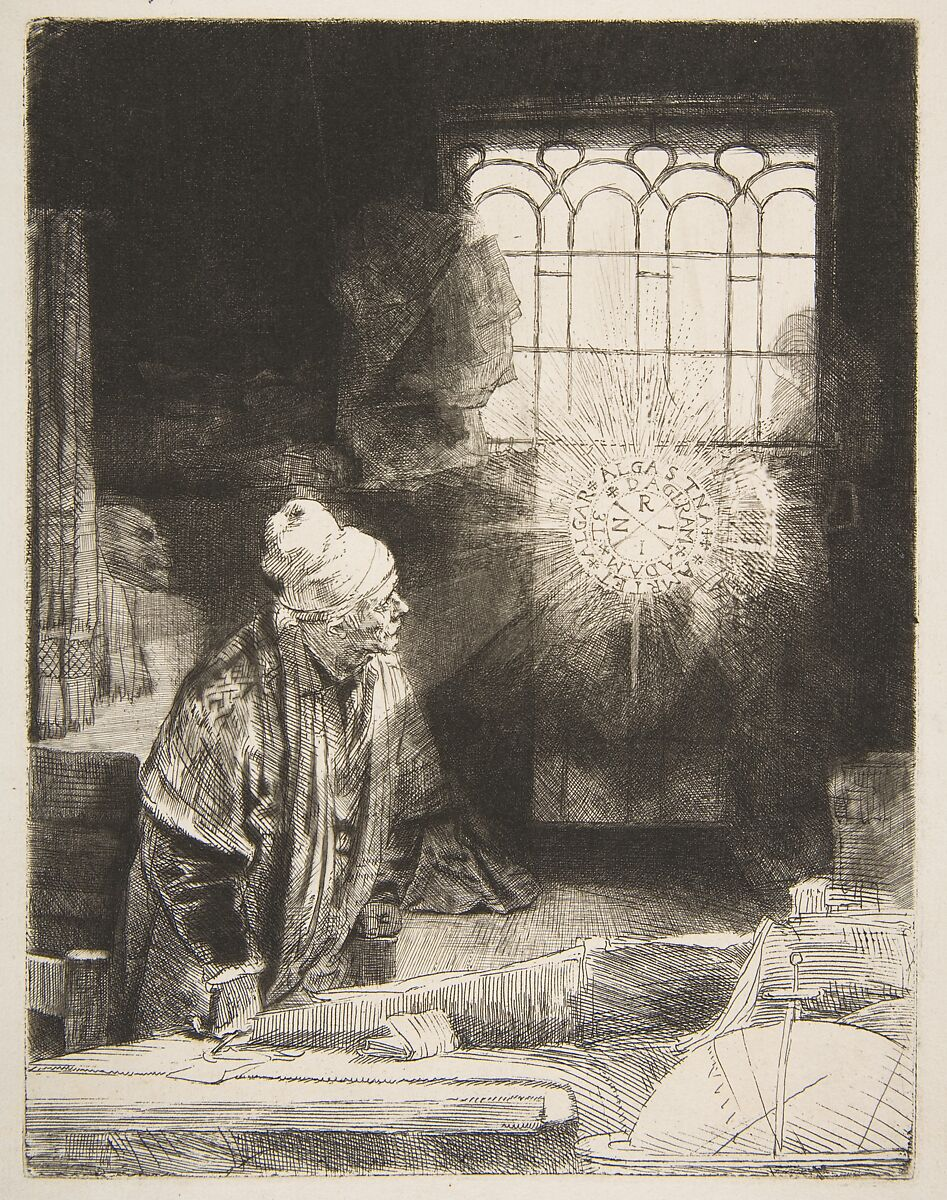
Faust - Rembrandt van Rijn 1652
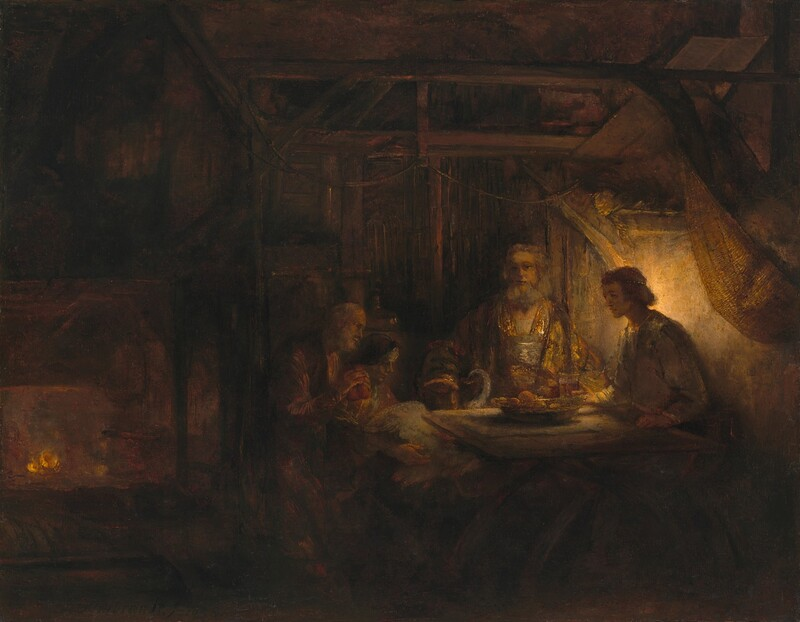
Also perhaps, as a warning. He looked at Europe and saw a civilization moving with the appetite of Faust. Science accelerated. Production accelerated. Nations expanded their ambitions.
Expansion itself did not concern him. Jung admired science, pursued knowledge with intensity, and spent his own life constructing systems. But he was cogniscent of movement detached from meaning. A person can lose sight of why they began moving. Intelligence without symbolic orientation. Ideas do not simply describe reality. they evolve across time and eventually become psychological structures through which people understand themselves. Jung began with a strange sensation inside a child.
A story of how symbolic structures persist across time and what gets lost when expansion detaches from meaning. The above emerged from my reading Memories, Dreams and Reflections