Journal Entry: The Reflexive Loop
In the stillness of observation lies the foundation of understanding. Yet, what we observe is not the whole of what is. It is merely the raw clay, waiting to be shaped by the mind. Echoing the words of Heisenberg from his 1958 book Physics and Philosophy" What we observe is not nature itself, but nature exposed to our method of questioning.” Kant suggests we do not see the world as it is in itself (the noumena), but rather as it appears to us through the lens of our own cognition (the phenomena). The clay is shapeless until our minds create a form for it.
Earlier this week, I came across a diagram illustrating this reflexive loop for how we select data and that shapes our beliefs, actions, and ultimately that shapes our reality. Our perceptions are not passive reflections but active constructions, built rung by rung upon a ladder of inference. This ladder determines not only what we see but how we see it , and, ultimately, how we act. Deepening neural grooves through repeated interpretation and belief formation.
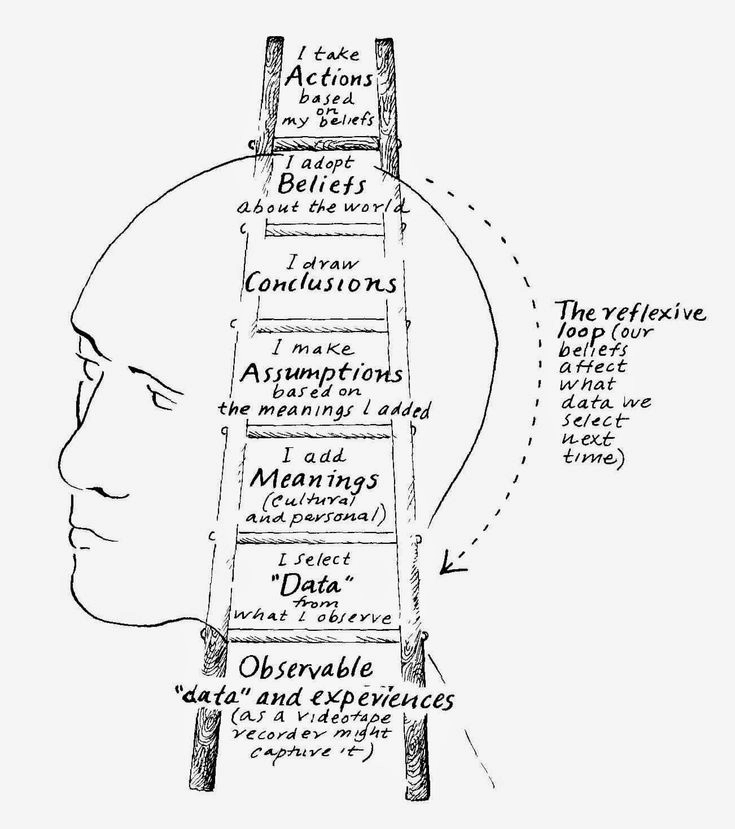
The brain’s networks of neurons fire in patterns that filter and prioritise information, reinforcing pathways shaped by past experiences and emotions. This layered process mirrors how we climb the ladder: we select data, add meaning, form assumptions, draw conclusions, adopt beliefs, and act. Each step reinforces neural pathways, embedding patterns that shape how we perceive reality. The brain, in its plasticity, continuously updates these circuits, shaping beliefs that, in turn, influence what we notice and value.
Working in finance has made me acutely aware of this loop. Behavioural finance reveals how biases shape the way we analyse data and make decisions. We do not just see patterns; we impose them. Markets, like neural pathways, reflect and reinforce narratives built on incomplete data and emotional inference. This recursive process means that what we believe shapes what we notice, and what we notice validates what we believe. Whether grounded in truth or illusion. It reveals the fragility of our perceived reality. Beliefs can scaffold decisions that reinforce flawed assumptions. Recognising this loop is just an exercise in awareness.
Cool things I found this week…
1. Personality System built by @thebeautyofsaas
Link-beauty of sass personality system
Excited to see this do the rounds on X because I attempted to build something similar for personal use last year. After conversations with friends on the value on personality tests, and later using https://www.dimensional.me/ across our friend group. I called it my “personal blueprint” (pre-bryan Johnson) and used ChatGPT to aggregate findings across systems (Human Design, Enneagram, MBTI, values, archetypes, intelligence profiles, decision heuristics, and life narrative). We then mapped childhood vs adult interests across different intelligence domains, revealing a shift from highly visual/emotional creativity toward analytical and systems-based thinking. This helped me in identifying which neglected creative drives may be worth re-exploring today.
I am excited by rediscovering this, I had not remembered the work on intelligence domain shifts over time, this is on my radar to re-explore over the coming weeks. Especially in parallel with my Second Brain system which could also be useful to explore more formally in a blog post. Always excited by the rigor that public mapping imposes on a personal project.
2. Essays By Joseph Mitchell, The Old House at Home
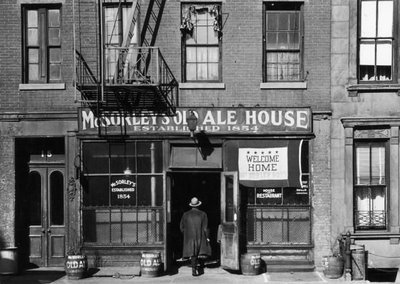
Published April 6, 1940
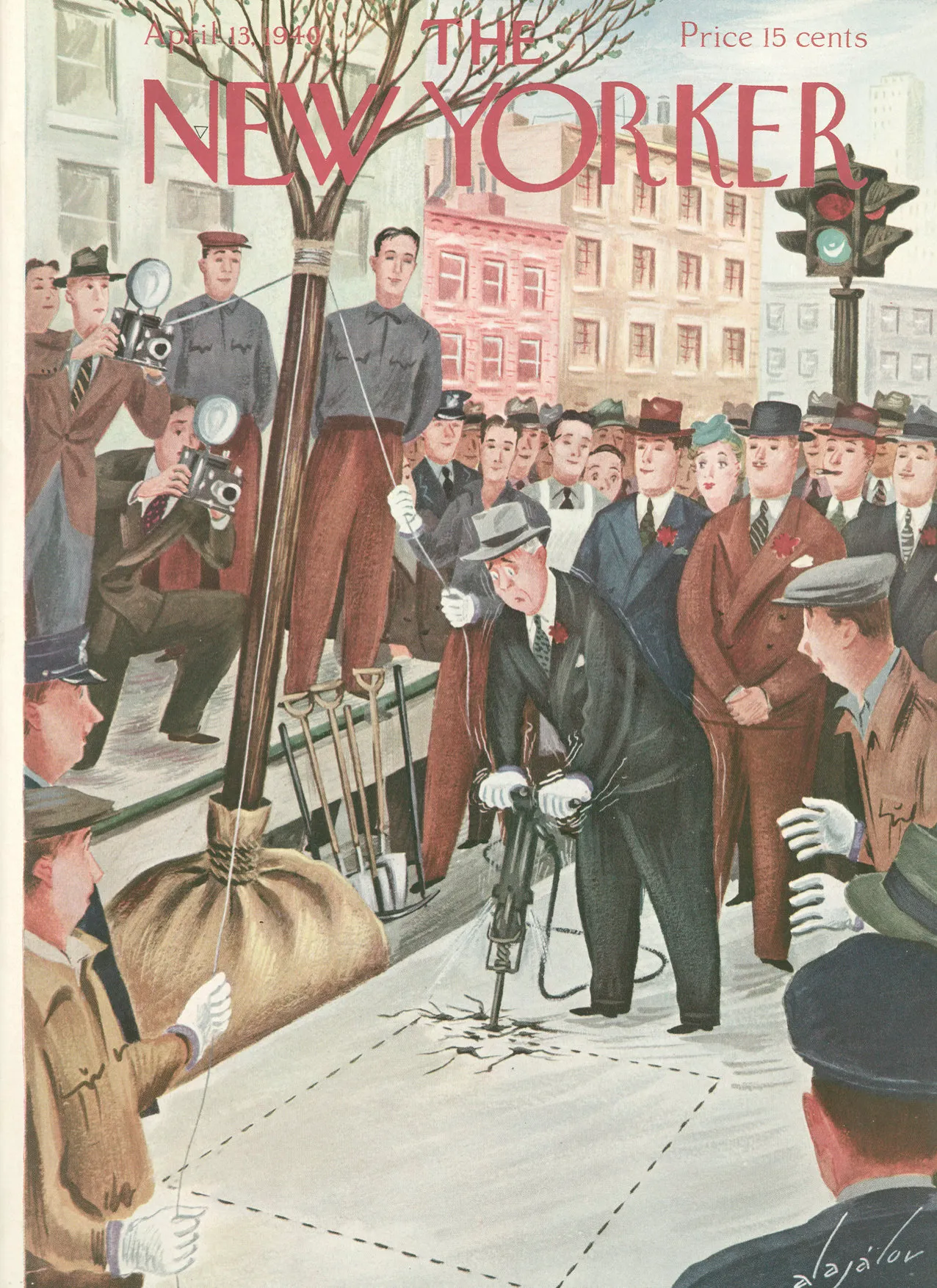
3. Do not bend
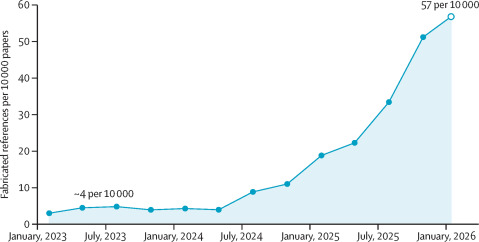
4. Fabricated citations: an audit across 2·5 million biomedical papers
A reference-integrity audit of 2·5 million biomedical papers spanning 3 years, showing that fabricated references are embedded in the peer-reviewed literature at scale, and that the rate of fabrication is accelerating.
5. Algebrica: a mathematical knowledge base
Mathematics knowledge base by Antonio Lupetti. The Ontological Graph, described in the meta as “formalizes the conceptual structure of the site, representing topics as nodes and their relations within a coherent mathematical knowledge network.” is visualised via bespoke D3 force-directed graph.
github.com/antoniolupetti/algebrica
6. Key Box: an app that turns everyday objects into personal actions.
Key Box is an app and device that turns everyday objects into personal actions.
— 56 (@56_digital) November 5, 2025
When the tray detects an unassigned weight, the app creates a new card for it. The card takes a user prompt to generate and assign a custom Mac command. https://t.co/bYCXcHZNPt pic.twitter.com/SJkYdwQHFl